 |
International White Dove Society
|
|
||||||||
|
|
International White Dove Society
|
|
||||||||
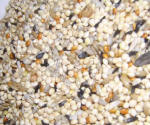
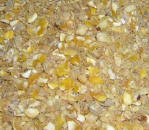
White Ring-neck Doves or Love DovesFoods and Feeding A very good food is essential. A Love Dove diet should consist of wheat, milo, rice, millet, cracked corn, vetch, chopped peanuts, safflower and little back sunflower that is high in oil. There is less waste if these are not mixed. Don't overfeed! Extra feed on the ground may spoil and cause illness. Pigeon pellets or the smaller 20% protein game-bird pellets, or even "crumbled" poultry feed may suffice if the birds become used to it. The pellets will supply vitamins A andD3. The D3 is necessary if direct sun is not available.
Supplements are important too. Be sure
to provide salts, minerals, and calcium.
Provide extra calcium
in the form of crushed eggshell, or oyster shell, or a special pigeon
grit. Livestock salt with trace elements such as iodine, cobalt,
manganese, and other minerals is also good. This extra mineral
supplement is especially necessary if the doves are raising young.
Green leaves such as dandelion leaves or spinach are enjoyed, but they
are not necessary if complete pellets are given. Be sure that the
leaves have not had herbicide sprayed on them if you gather them in
the wild. I always provide water soluble vitamins regularly about 2X
a week.
|
||||||||
|
All About Love Doves |
|
|
Your subscription allows you to make one copy of each page for your use.




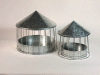 Feeders should
be designed to limit the food that is scatted by the birds. Some
breeders feed once a day and remove the excess feed after one hour,
this may help to decrease scattered food in your aviary. If your
birds are raising young, be sure there is food available all the time
however. Just be sure that they are at least 13% protein for basic
maintenance and for breeding
Feeders should
be designed to limit the food that is scatted by the birds. Some
breeders feed once a day and remove the excess feed after one hour,
this may help to decrease scattered food in your aviary. If your
birds are raising young, be sure there is food available all the time
however. Just be sure that they are at least 13% protein for basic
maintenance and for breeding
